
Introduction
Electric scooters are user-friendly, practical and convenient ways to travel. But, like any other vehicle, they also need regular maintenance to stay safe and work properly. Many riders think about maintenance only when a problem occurs, such as low tire pressure, reduced battery range or unusual noises.
The good part is that you do not have to be an expert mechanic to take care of your electric scooter. You can check the main parts and handle some basic maintenance tasks yourself. Regular checking can help you find small problems before they become bigger and more expensive.
In this guide, we will look at the main parts of an electric scooter that need regular checking, how often you should check them and when you should get help from a professional. Always follow the instructions for your own scooter because every model can have different requirements.
If you are new to electric scooters and want to understand how they work, read our guide on what an electric scooter is
Table of Contents
Quick Electric Scooter Maintenance Schedule
You can use this table as a general guide. Your scooter’s manual should be your main source because the right maintenance schedule can depend on the model and how often you ride.
| When to check | What to check |
|---|---|
| Before every ride | Brakes, tires, steering, lights, visible damage and folding lock if your scooter has one |
| Regularly | Tire pressure, charger and cable, loose parts and unusual sounds |
| Monthly or as advised in the manual | Tire wear, wheels, folding mechanism, bearings and suspension if equipped |
| At the service interval | Detailed inspection and replacement of worn parts when needed |
| As soon as a problem appears | Any issue that affects braking, steering, the frame, electrical parts or battery safety |
If you notice a problem that can affect your safety, do not wait until the next scheduled check. Stop riding and get it checked first.
Why Is Electric Scooter Maintenance Important?
An electric scooter has an electric motor instead of a traditional engine, but that does not mean it is maintenance-free. It has several mechanical and electrical parts that can become loose, damaged or worn over time. Regular inspection can help you notice these problems earlier.
Some of the main benefits of proper maintenance are:
Improve safety
Safety is one of the main reasons to maintain your electric scooter regularly. Parts such as tires, brakes and steering affect how well you can control and stop the scooter. Lights are also important, especially when riding in low-light conditions. Checking these parts before a ride can help you notice a problem before it becomes dangerous.
Maintain performance
Regular maintenance can help your scooter work as expected. For example, correct tire pressure can support better handling and efficiency. Checking the battery and other parts can also help you notice changes in performance.
Prevent expensive repairs
Small problems can become bigger when you ignore them. A tire that keeps losing pressure, a loose part or a brake that is not working properly may need more repair if you continue riding. Finding the problem early can help prevent additional damage, although regular maintenance cannot prevent every possible fault.
Extend the scooter’s lifespan
Proper care can help reduce unnecessary wear and keep your scooter in good condition for longer. Cleaning it correctly, checking the tires and brakes, and replacing worn parts when needed can all help. However, maintenance cannot guarantee a particular lifespan because battery age, road conditions, use and the scooter model also matter.
1. Check the Tires
Tires are one of the important parts of an electric scooter because they affect grip, balance, handling, comfort and range. If the tire pressure is incorrect or the tire is damaged, the scooter may not handle properly.
Scooters generally use three types of tires:
- Pneumatic tires: These tires contain air, so you need to check their pressure and inflate them when required.
- Tubeless tires: These tires also contain air but do not have a separate inner tube. They can still lose pressure or get punctures.
- Solid tires: These tires do not contain air, so they do not need inflation. However, they can still wear down, crack or become damaged.
All types of tires need regular inspection for damage and wear.
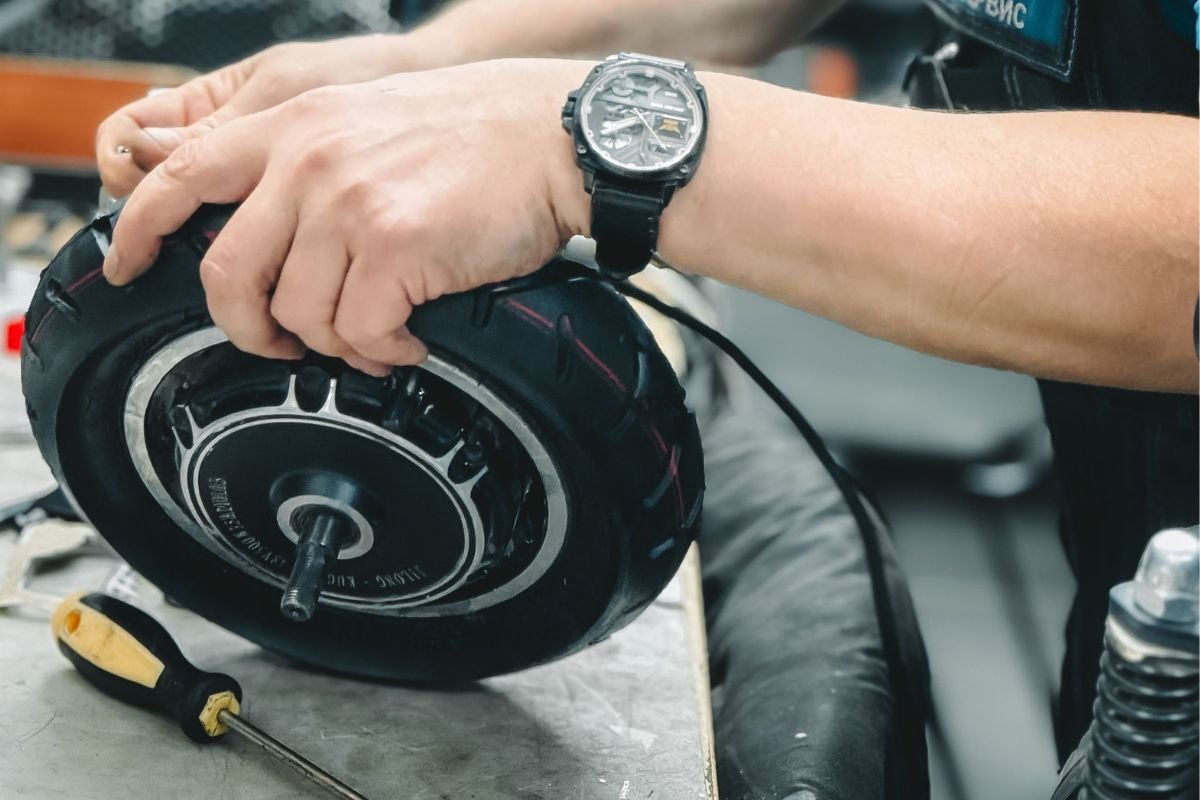
How to check tire pressure
- Check your scooter’s manual or the manufacturer’s website to find the recommended tire pressure.
- Use a suitable tire-pressure gauge or a pump that has a gauge.
- Check the pressure according to the manufacturer’s instructions.
- Inflate the tire to the recommended pressure. Do not use a pressure figure from another scooter because it may be different.
- If the tire keeps losing pressure, check for a possible leak or get it inspected.
There is no single PSI that is correct for every electric scooter. The right pressure depends on your model, so always follow the manufacturer’s recommendation.
What should you look for?
When checking the tires, look for the following signs:
- Cracks or cuts: Check the tire surface and sidewalls for visible damage.
- Uneven wear: See if one part of the tire is wearing down faster than the rest.
- Punctures: Look for signs of air leakage or a puncture.
- Objects stuck in the tire: Check for nails, stones or other sharp objects.
- Low pressure: If your tire looks low or the scooter handles differently, check the pressure with a gauge.
- Wheel movement: Check whether the wheel looks loose or wobbles.
Do not ignore a damaged tire or one that keeps losing air. If the tire is badly damaged or the wheel feels unstable, do not ride until it has been checked or repaired.
Why is tire pressure important?
Incorrect tire pressure can affect your scooter in different ways:
- Range: Low pressure can increase rolling resistance, which may use more battery power.
- Handling: Incorrect pressure can make the scooter harder to control.
- Tire wear: Incorrect pressure can cause tires to wear unevenly or more quickly.
- Comfort: The ride may feel less comfortable on uneven roads.
Checking tire pressure regularly is a simple task, but it can make a difference to the way your scooter rides.
2. Inspect and Test the Brakes
Brakes are among the most important safety parts of an electric scooter. They help you slow down and stop, so you should not ignore any change in how they work.
Before riding, test the brakes at a slow speed in a clear and safe place. Make sure they respond normally and that the scooter slows down as expected. This basic test does not replace proper inspection or servicing.
Signs of a brake problem
Look for these warning signs:
- Weak braking: The scooter takes more effort or more time to stop than usual.
- Longer stopping distance: The scooter travels farther than normal before stopping.
- Strange noises: Grinding or scraping sounds may indicate a problem.
- Vibration: The scooter shakes or vibrates unusually when braking.
- Different brake lever feel: The lever feels too loose, stiff or different from normal.
- Visible damage: Cables, brake pads or other parts look damaged, or you notice a fluid leak.
Electric scooters can have different types of brakes, including mechanical disc brakes, hydraulic disc brakes, drum brakes and electronic or regenerative brakes. Their maintenance methods are not the same, so do not assume that one procedure works for every scooter.
If the brakes become weak or unreliable, stop riding until the problem is fixed. If you are not sure how to inspect or repair the brake system, get help from a qualified technician.
3. Check the Handlebar, Stem, Bolts and Folding Mechanism
The handlebar and stem help you control the scooter, so they should feel stable. Regular use and road vibrations can sometimes cause parts to loosen or become damaged.
With the scooter switched off, check the following parts:
- Handlebar: Look for cracks, looseness or unusual movement.
- Stem: Check whether it moves in a way that it should not.
- Folding mechanism: If your scooter folds, make sure the lock closes fully and stays secure.
- Deck and frame: Look for cracks, dents or missing parts.
- Kickstand: Check whether it is attached securely and works properly.
- Bolts and screws: Look for loose, missing or damaged fasteners that you can safely see.
Do not tighten every screw by guessing. Some parts need a specific torque setting or tool, and tightening them too much can damage the parts. Follow your scooter’s manual. If the stem, frame or folding lock is loose or damaged, do not ride until it has been checked and repaired.
4. Clean Your Electric Scooter Safely
Cleaning your electric scooter helps remove dirt and makes it easier to notice visible damage. But you should be careful with water because it can damage electrical components. A water-resistance rating does not mean the scooter is completely waterproof.
How to clean your scooter
- Switch off the scooter and disconnect the charger.
- Check the manual for the correct cleaning method.
- Remove loose dirt with a soft brush or cloth.
- Wipe the outside with a slightly damp cloth if the manufacturer allows it.
- Keep water away from the charging port, connectors and other openings.
- Do not open electrical parts just to clean the scooter.
- Let the scooter dry according to the manufacturer’s instructions before riding or charging it.
Avoid pressure washers and do not pour water directly over electrical parts. Never clean the scooter while it is charging. If the manufacturer says not to ride in rain or through puddles, follow that advice even if the scooter has some water resistance.
5. Look After the Battery and Charger
The battery is one of the main components of an electric scooter. It supplies power to the motor and affects how far you can travel on a charge. Battery performance can change because of age, temperature, riding habits, storage and other factors.
Good battery maintenance habits
Following some basic habits can help you take care of your scooter’s battery:
- Use the original charger or a replacement approved by the manufacturer.
- Follow the charging instructions for your exact scooter model.
- Keep the charger, cable and charging port clean and dry.
- Avoid leaving the battery fully discharged for a long time.
- Do not leave the scooter in extreme heat or cold for a long period.
- If you are storing the scooter for a long time, follow the manufacturer’s instructions about battery charge and storage.
- Do not use a charger or cable that looks damaged.
Charging and storage recommendations can differ between scooters. So, do not assume that one charging percentage or temperature range is correct for every model.
Signs of a battery problem
Pay attention if you notice any of these warning signs:
- The scooter travels much less distance on a full charge than before.
- The scooter switches off unexpectedly.
- Charging repeatedly fails or behaves differently from normal.
- The battery becomes unusually hot.
- You notice swelling, leakage, smoke or visible damage.
A reduction in range does not always mean the battery is damaged. Cold weather, tire pressure and riding conditions can also affect range. If you check these things and the problem continues, get the scooter inspected.
Battery safety: If the battery is swollen, leaking, smoking or unusually hot, stop using and charging the scooter and keep away from it. Do not open, puncture or try to repair the battery yourself. If there is smoke, fire or immediate danger, follow local emergency guidance.
For more details, you can also read our electric scooter battery guide.
6. Check the Lights and Electrical Parts
Lights and electrical components are important for safe riding. Before riding, make sure the lights work and look for any visible damage to the electrical parts.
Check the following:
- Headlight and rear light: Make sure they turn on and work properly.
- Brake light and reflectors: Check them if your scooter has them.
- Display and controls: Look for error messages, flickering or controls that do not respond normally.
- Charging port: Check for visible dirt, moisture, rust or damage before connecting the charger.
- Visible wires: Look for exposed, cut, burnt or damaged wires.
Do not open the scooter to check internal wiring unless you have the right skills and the manufacturer allows it. If you notice damaged wires, sparks, a burning smell or repeated power loss, stop using the scooter and seek professional help.
7. Check the Wheels, Bearings and Suspension
The wheels should feel secure and rotate as they should. Bearings help the wheels turn smoothly, while suspension, if your scooter has it, helps reduce the effect of bumps on the road.
With the scooter switched off and safely supported as explained in the manual, look for:
- A wheel that wobbles or moves from side to side.
- Grinding, clicking or rubbing sounds.
- Visible damage to the wheel, tire or bearing area.
- Unusual resistance when the wheel turns.
- Cracks, loose parts or leaks in the suspension, if equipped.
- The scooter pulling to one side or handling differently than usual.
Some resistance can be normal depending on the motor and brake design, so do not decide that a bearing is damaged based only on that. However, if the wheel feels loose, makes unusual noises or the scooter feels unstable, stop riding and arrange an inspection.
8. Follow a Regular Maintenance Routine
The right maintenance schedule depends on your scooter model, how often you ride and the type of roads you use. The table below is a general reminder. Always compare it with the instructions in your scooter’s manual.
| Task | When to check | What to do |
|---|---|---|
| Brakes, steering and lights | Before every ride | Make sure the main safety parts work normally |
| Tire condition | Before every ride | Look for damage, objects stuck in the tire and signs of pressure loss |
| Tire pressure | Regularly, as advised in the manual | Use a gauge and inflate to the recommended pressure |
| Charger and charging port | Regularly and before charging | Check for damage, dirt and moisture |
| Bolts and folding lock | Regularly or as advised | Check visible parts and tighten only as instructed |
| Wheels, bearings and suspension | Periodically and when symptoms appear | Look for wobbling, unusual sounds, wear or damage |
| Cleaning | When needed | Use the cleaning method allowed by the manufacturer |
| Professional service | At the recommended interval | Follow the service and replacement schedule |
Do not wait for the next maintenance day if you notice a problem. Any issue that affects safe braking, steering, the frame, the wheels or electrical safety needs attention as soon as possible.
9. Common Electric Scooter Problems and What They May Mean
Sometimes one problem can have several possible causes. This table can help you decide what to check, but it cannot replace a proper diagnosis.
| Problem | Possible reason | What you should do |
|---|---|---|
| Reduced battery range | Low tire pressure, cold weather, riding conditions, battery age or another fault | Check tire pressure and riding conditions. Get it checked if the problem continues. |
| Grinding sound while braking | Possible worn or damaged brake parts | Stop riding until the brakes have been inspected. |
| Wheel wobbling | Loose parts, wheel damage, bearing wear or another mechanical problem | Stop riding and arrange an inspection. |
| Tire keeps losing pressure | Puncture, valve leak or tire damage | Repair or replace the tire before riding. |
| Scooter does not charge | Charger, cable, charging port, battery or temperature-related issue | Check the visible equipment and manual. Do not use damaged equipment. |
| Unexpected shutdown or error message | Battery, controller, wiring or another system issue | Follow the model’s troubleshooting guidance and get help if it continues. |
| Scooter pulls to one side | Tire, wheel, steering or alignment problem | Stop if handling is unsafe and get it checked. |
| Burning smell, smoke, swelling or unusual battery heat | Possible serious battery or electrical problem | Stop using and charging the scooter, keep away and seek appropriate help. |
10. Common Maintenance Mistakes to Avoid
Ignoring tire pressure
Low or incorrect pressure can affect handling and cause faster tire wear. Use a pressure gauge instead of checking only by looking at the tire.
Riding with weak brakes
Do not continue riding if the brakes feel weak or unreliable. Get the problem fixed before using the scooter again.
Leaving the battery empty for a long time
Leaving the battery fully discharged for a long time can damage it. Follow the storage and charging advice for your model.
Using the wrong charger
A charger that does not match your scooter’s requirements can damage the electrical system and create a safety risk. Use the charger approved by the manufacturer.
Using too much water when cleaning
Pressure washers and direct streams of water can push water into electrical parts. Clean the scooter using the method given in the manual.
Ignoring unusual sounds or loose parts
A new rattling sound, grinding noise or change in handling can be a warning sign. Do not assume the problem will go away by itself.
Trying to repair parts you do not understand
Basic cleaning and visual checks are manageable for many riders. But battery, electrical, structural and complex brake repairs may need special tools or training. Do not take parts apart if you cannot repair them safely.
Electric Scooter Maintenance Checklist
You can save this checklist and use it as a reminder. Adjust it according to the manual for your scooter.
Before every ride
- Test the brakes.
- Check the tires for visible damage and pressure loss.
- Check tire pressure according to the recommended interval if your scooter has pneumatic tires.
- Make sure the lights work.
- Check the handlebar and steering for unusual movement.
- Make sure the folding lock is secure, if your scooter has one.
- Look for visible damage or loose parts.
Regularly
- Check pneumatic tire pressure with a gauge.
- Inspect the charger, cable and charging port.
- Look for loose or missing screws and bolts.
- Listen for unusual sounds from the wheels, brakes or motor.
- Clean the scooter using the approved method.
- Pay attention to changes in battery behaviour or range.
Periodically and according to the manual
- Inspect tire wear, wheels and bearings.
- Check the folding mechanism and suspension, if equipped.
- Follow the manufacturer’s service schedule.
- Arrange professional inspection when needed.
Frequently Asked Questions
How often should I maintain my electric scooter?
You should check important safety parts such as brakes, tires, steering and lights before every ride. Other tasks, such as tire-pressure checks, checking fasteners and professional servicing, should follow the scooter’s manual and your riding conditions.
How often should I check tire pressure?
Follow the recommendation for your scooter model. Some manufacturers suggest checking at a regular monthly interval, but the correct schedule can vary. Check sooner if a tire looks low or the scooter handles differently. Solid tires do not need inflation.
Can I wash my electric scooter with water?
Only use the cleaning method allowed by the manufacturer. Water-resistant does not mean waterproof. Avoid pressure washers, keep water away from electrical parts and make sure the scooter is dry as instructed before riding or charging.
How can I help my electric scooter battery last longer?
Use the approved charger, follow the charging and storage instructions, avoid leaving the battery empty for a long time and protect the scooter from extreme temperatures. The correct battery care routine can differ between models.
When should I stop riding and get professional help?
Stop riding if the brakes are not working properly, the wheel or steering feels loose, the frame or folding lock is damaged, or an electrical problem affects safe operation. If the battery is swollen, leaking, smoking or unusually hot, stop using and charging the scooter and keep away from it.
Conclusion
Maintaining an electric scooter does not always require advanced mechanical knowledge. You can do many basic checks yourself, such as checking the tires, brakes, steering, lights, battery behaviour and other visible parts.
The most important thing is to be consistent. Check the main safety parts before riding, follow the maintenance schedule in your scooter’s manual and do not ignore unusual sounds or changes in performance. These habits can help you notice problems early and keep your scooter in better condition.
Always follow the instructions for your exact scooter when checking tire pressure, charging and storing the battery, cleaning the scooter, tightening bolts or arranging service.
Read next: Electric Scooter Battery Guide: How Long Do They Last and How to Extend Battery Life
Sources and Further Reading
Always check the manual for your exact electric scooter model for recommended tire pressure, battery charging and storage, cleaning restrictions, bolt-tightening settings and service intervals.
- Segway Ninebot KickScooter F2 Product Manual — maintenance instructions and model-specific specifications.
- Xiaomi Electric Scooter 5 FAQ — model-specific tire pressure, checks and troubleshooting.
- Xiaomi Electric Scooter 5 Pro Battery Maintenance Guidance — battery use and storage advice.
Note: These manuals and support pages cover specific models. Always follow the instructions for your own scooter, as specifications and maintenance requirements can differ.